
Search
Mild stroke affects more than half the stroke population, yet there is limited evidence characterizing cognition over time in this population, especially with predictive approaches applicable at the individual-level. We aimed to identify patterns of recovery and the best combination of demographic, clinical, and lifestyle factors predicting individual-level cognitive state at 3- and 12-months after mild stroke.
During winter months of temperate regions, concurrent epidemics of multiple respiratory pathogens can occur, causing periods of increased clinical burden. Case time series, which are predominantly used to monitor infection levels, can exhibit substantial noise and day-of-the-week effects, limiting the visual interpretation of trends in raw data.
Cases identified through mass testing represent only a fraction of infections, depending on the propensity of infected individuals to seek testing. Quantifying the variation in test-seeking behaviour through time or between population subgroups provides important information on testing uptake and supports epidemiological analyses of case data that may otherwise be biased.
Quantifying the extent to which previous infections and vaccinations confer protection against future infection or disease outcomes is critical to managing the transmission and consequences of infectious diseases. We present a general statistical model for predicting the strength of protection conferred by different immunising exposures (numbers, types, and strains of both vaccines and infections), against multiple outcomes of interest, whilst accounting for immune waning.
The availability of COVID-19 vaccines promised a reduction in the severity of disease and relief from the strict public health and social measures (PHSMs) imposed in many countries to limit spread and burden of COVID-19. We were asked to define vaccine coverage thresholds for Australia's transition to easing restrictions and reopening international borders.
A survey of 136 articles published in 2019 (sampled at random) was conducted to determine whether a statement about missing data was included.
Malaria remains one of the leading causes of death, particularly in Africa and among children.
Nick Golding BSc DPhil Honorary Research Fellow Nick.Golding@thekids.org.au Honorary Research Fellow Professor Nick Golding is the UWA Chair in
The Vector Atlas aims to update and create vector species maps and spatial products that improve disease prediction, mitigation and preparedness.
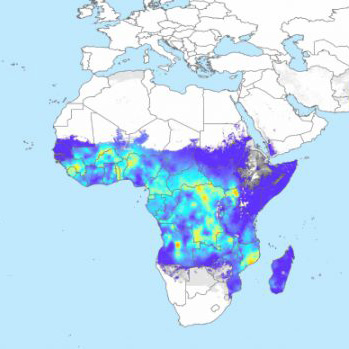
The Infectious Disease Ecology and Modelling team led by Professor Nick Golding, combines mathematical and statistical modelling, ecology, and public health to address malaria and other infectious and vector-borne diseases. The team uses modelling and maps to measure the risk posed by some of the world’s most important and neglected diseases – including malaria, Japanese Encephalitis and COVID-19 – and provide rapid modelling analyses to policy makers.