
Search
Recent research showed that precision medicine can identify new treatment strategies for patients with childhood cancers. However, it is unclear which patients will benefit most from precision-guided treatment.
Delivering cancer control at scale for Aboriginal and Torres Strait Islander communities is a national priority that requires Aboriginal and Torres Strait Islander leadership and codesign, as well as significant involvement of the Aboriginal community-controlled health sector. The unique genomic variation observed among Aboriginal and Torres Strait Islander peoples may have implications for standard and precision medicine.
Due to their anatomical locations, optic pathway gliomas (OPGs) can rarely be cured by resection. Given the importance of preserving visual function, we analyzed radiological and visual acuity (VA) outcomes for the type II RAF inhibitor tovorafenib in the OPG subgroup of the phase 2 FIREFLY-1 trial.
Gliomas account for nearly 30% of all primary central nervous system (CNS) tumors in children and adolescents and young adults (AYA), contributing to significant morbidity and mortality. The updated molecular classification of gliomas defines molecularly diverse subtypes with a spectrum of tumors associated with age-distinct incidence.

The Kids Research Institute Australia researcher, Dr Raelene Endersby, will work to develop less toxic treatments for children with brain cancer, thanks to support from Cancer Council WA.
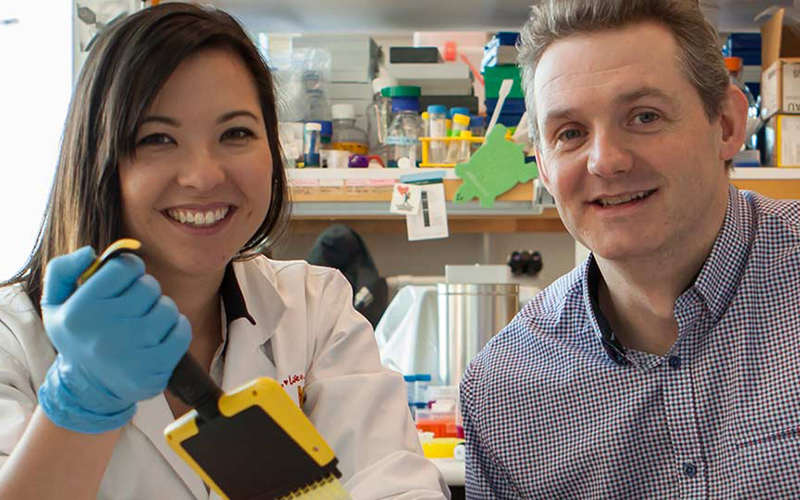
A new combination of drugs could help to increase survival rates with fewer side effects for some children with one of the most aggressive forms of childhood brain cancer.
We identified previously unidentified gene fusions involving the MET oncogene in pediatric glioblastoma
The trivalent inactivated influenza vaccine is safe, immunogenic, provides clinical protection and should be administered annually to immunosuppressed children receiving treatment for cancer
This study investigates the different patterns of relapse in patients with central nervous system mixed malignant germ cell tumors - treated with chemotherapy.
This study investigated the relapse and outcome patterns of patients with central nervous system mixed malignant germ cell tumors treated with chemotherapy-only