
Search
Due to their anatomical locations, optic pathway gliomas (OPGs) can rarely be cured by resection. Given the importance of preserving visual function, we analyzed radiological and visual acuity (VA) outcomes for the type II RAF inhibitor tovorafenib in the OPG subgroup of the phase 2 FIREFLY-1 trial.
KMT2A-rearranged acute lymphoblastic leukaemia (ALL) represents a high risk subtype of childhood ALL. Historical treatment strategies have comprised of intensification with conventional chemotherapy. However, outcomes have remained consistently poor compared to the advances that have been seen for other ALL subtypes, particularly for infants diagnosed before their first birthday
Acute lymphoblastic leukaemia (ALL) is the most common paediatric malignancy and remains one of the most common causes of cancer-related death in children and adolescents. It is characterised by the proliferation of immature lymphoid cells capable of infiltrating bone marrow, blood and extramedullary sites. Five-year overall survival rates exceed 90% with current multidrug chemotherapeutic regimens. This manuscript reviews the abdominal imaging features of leukaemic infiltration in children with ALL at the time of initial diagnosis and following relapse.
CD8+ T cells are an important weapon in the therapeutic armamentarium against cancer. While CD8+CD103+ T cells with a tissue-resident memory T (TRM) cell phenotype are associated with favorable prognoses, the tumor microenvironment also contains dysfunctional exhausted T (TEX) cells that exhibit a variety of TRM-like features.
Several studies have established that patients with localized perinatal neuroblastoma can be safely observed; however, long-term outcomes have not been previously reported. We evaluated long-term outcomes of infants with suspected perinatal neuroblastoma enrolled on the Children's Oncology Group ANBL00P2, which included an expectant observation approach.
Citation: Sek K, Chen AXY, Cole T, Armitage JD, Tong J, ……… Waithman J, Parish IA, et al. Tumor site-directed A1R expression enhances CAR T cell
Leukaemia, also spelled leukemia, is a cancer that develops in the bone marrow and results in abnormal white blood cells. It is the most common cancer in children, accounting for almost a third of all childhood & teen cancers.
Ewing Sarcoma of the pelvis has poorer outcomes than other anatomical sites, with complex anatomy often precluding resection with wide margins. The role of postoperative radiotherapy (RT) in improving outcomes remains undefined. A systematic review using Medline, Embase and Cochrane databases (1972-April 2024) evaluated postoperative RT's impact on local recurrence, event-free survival and overall survival. Twenty-nine retrospective studies (21 to 296 patients) met inclusion criteria, with 28 rated good quality.
DNA methylation-based classification is now central to contemporary neuro-oncology, as highlighted by the World Health Organization classification of central nervous system tumors. This expansion is a result of newly identified tumor types discovered through our large online repository and global collaborations, underscoring CNS tumor heterogeneity.
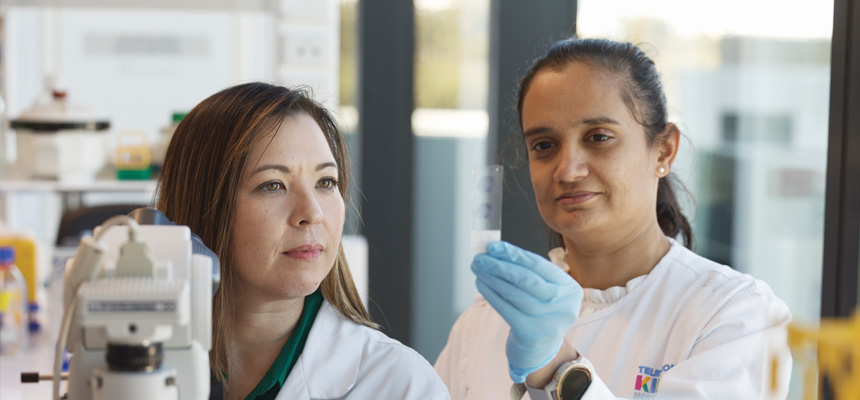
The WA Kids Cancer Centre has a suite of world-leading research projects to unlock new treatments for childhood cancers.