
Search
Microbiome science has been one of the most exciting and rapidly evolving research fields in the past two decades. Breakthroughs in technologies including DNA sequencing have meant that the trillions of microbes (particularly bacteria) inhabiting human biological niches (particularly the gut) can be profiled and analysed in exquisite detail.
Evidence suggests consumption of a Mediterranean diet (MD) can positively impact both maternal and offspring health, potentially mediated by a beneficial effect on inflammatory pathways. We aimed to apply metabolic profiling of serum and urine samples to assess differences between women who were stratified into high and low alignment to a MD throughout pregnancy and investigate the relationship of the diet to inflammatory markers.
Chronic obstructive pulmonary disease (COPD) is a complex disorder with a high degree of interindividual variability. Gastrointestinal dysfunction is common in patients with COPD and has been proposed to influence the clinical progression of the disease. Using the presence of bile acid(s) (BA) in bronchoalveolar lavage (BAL) fluid as a marker of gastric aspiration, we evaluated the relationships between BAs, clinical outcomes and bacterial lung colonisation.
In cystic fibrosis, bacteria–bacteriophage interaction in the lower airways is poorly understood. We present the near-complete genome of the uncultured Siphovirus-like bacteriophage, Staphylococcus aureus phage COMBAT-CF_PAR1, isolated from the lower airways. The genome spans 41,510 bp with 33.45% guanine–cytosine content and contains 65 open reading frames.
Burkholderia cepacia complex is a cause of serious lung infections in people with cystic fibrosis, exhibiting extremely high levels of antimicrobial resistance. These infections are difficult to treat and are associated with high morbidity and mortality.
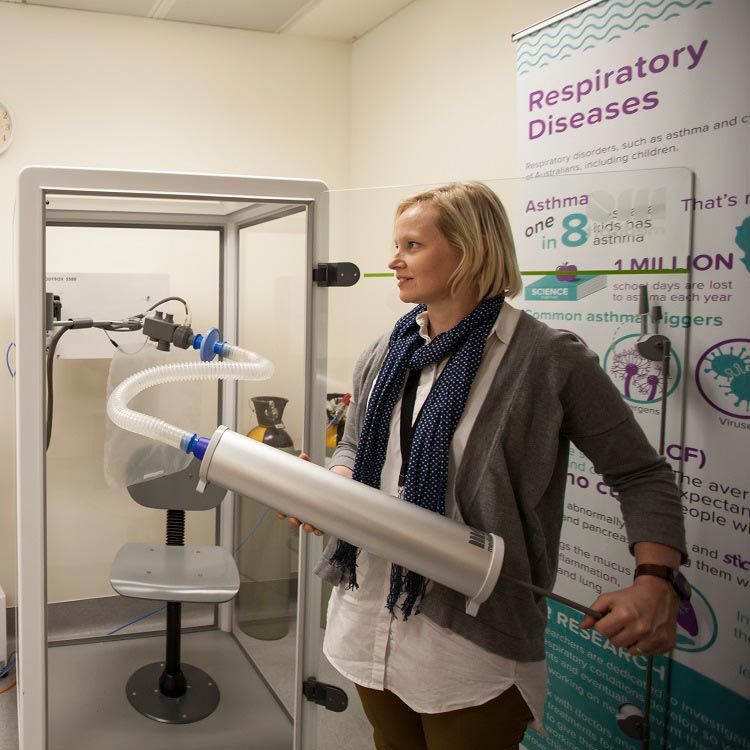
A The Kids Research Institute Australia study published in The Lancet Child & Adolescent Health has found that survivors of very preterm birth face declining lung function

Join us for our Annual Community Lecture entitled "You Are What You Breathe" with Professor Stephen Holgate.
The prevalence of LDCT-detected indeterminate lung nodules in 906 individuals with significant asbestos exposure was 8.5%, lower than many other CT studies
Evidence into the role of TGF-β1 in airway epithelial repair in asthma is still controversial. This study tested the hypothesis that the reduced TGF-β1 levels previously observed in paediatric asthmatic airway epithelial cells directly contribute to the dysregulated repair seen in these cells.
Free NE activity is deleterious for epithelial homeostasis and support the hypothesis that proteases in the airway contribute to CF structural lung disease