
Search
The aim of the present study was to compare scale and conditional reliability derived from item response theory analyses among the most commonly used, as well as several newly developed, observation, interview, and parent-report autism instruments.
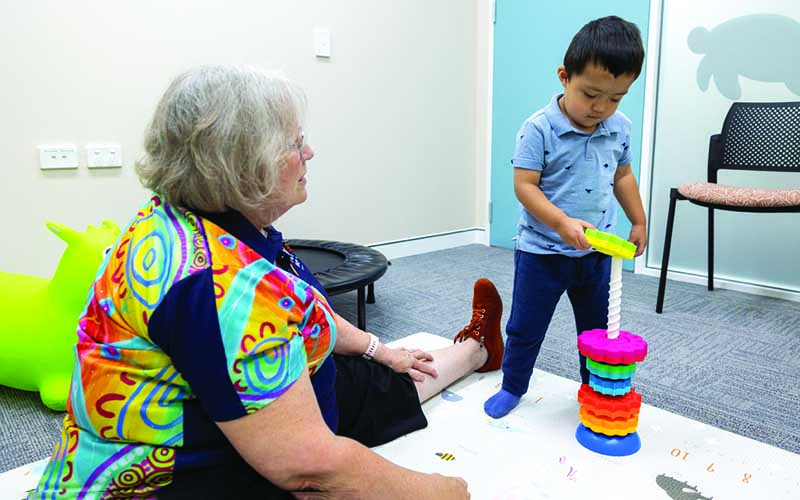
Discover how this family is benefitting from CliniKids' evidence-based therapies.
The aim of this study was to investigate the influence of children's autism characteristics, sensory profiles and feeding difficulties on caregiver-reported impact at mealtimes.
The number of words children produce (expressive vocabulary) and understand (receptive vocabulary) changes rapidly during early development, partially due to genetic factors. Here, we performed a meta-genome-wide association study of vocabulary acquisition and investigated polygenic overlap with literacy, cognition, developmental phenotypes, and neurodevelopmental conditions, including attention-deficit/hyperactivity disorder.
Autism spectrum disorder (ASD), a neurodevelopmental condition characterised by social and communication differences, is complex and aetiologically heterogeneous. Untargeted metabolomics is emerging as a tool in screening for biochemical abnormalities. This research was conducted using the Australian Autism Biobank resource and involved analysis of plasma metabolites to characterise metabolite differences between autistic children and controls.
This study aimed to understand how parents describe the most challenging behaviors exhibited by their children diagnosed with autism and/or ADHD, how those behaviours impact their family, and whether challenges are directly related to the core characteristics of these conditions.
Aotearoa New Zealand does not provide publicly-funded intensive autism support. While parent-mediated supports are promising, children and families may also benefit from direct clinician support. We tested the efficacy of a low-intensity programme involving parent- and clinician-delivered support for autistic children.
Prescriptions and use of medications to treat mental health conditions in young autistic populations are inconsistent worldwide. This makes it hard to compare findings from international studies to the Australian autistic population, where there are limited relevant studies. Apart from risperidone, there are no other medications specified for direct use in autistic persons. This study aims to gain initial broad understanding of the use of medications, commonly prescribed for mental health conditions, specifically by autistics under the age of 21 years.
This article describes the development of a Model of Care resource to support youth involved with the justice system where a neurodevelopmental disability such as Fetal Alcohol Spectrum Disorder is suspected. Service staff within the Youth Justice sector were engaged in an iterative process of resource development over a 9-month period.
Maternal immune activation and prenatal maternal stress are well-studied risk factors for psychiatric conditions such as autism and schizophrenia. Animal studies have proposed the gut microbiome as a mechanism underlying this association and have found that risk factor-related gut microbiome alterations persist in the adult offspring.