
Search
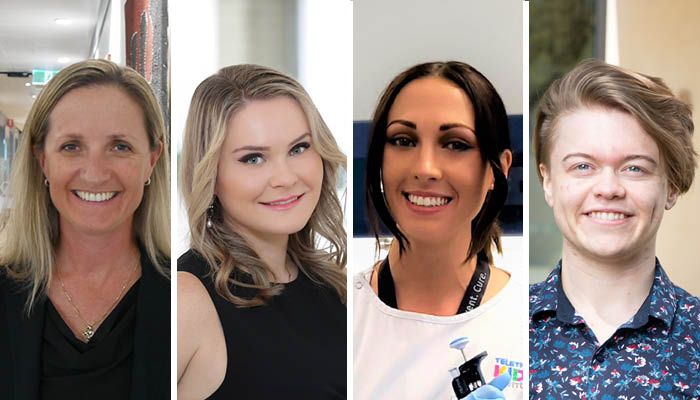
Four The Kids Research Institute Australia researchers from a diverse range of fields have been named as finalists for the prestigious 2022 Premier’s Science Awards.
Dr Penelope Strauss will use a prestigious Post-Doctoral Fellowship from Suicide Prevention Australia to develop and trial a world-first intervention.

With COVID-19 restrictions starting to lift and families resuming some level of ‘normal life’, it is natural to have mixed feeling during this time, says The Kids mental health researcher.
Perinatal emotional well-being is more than the presence or absence of depressive and anxiety disorders; it encompasses a wide range of factors that contribute to emotional well-being.
Media guidelines for the responsible reporting of suicide are a recognized universal suicide prevention intervention. While implemented in numerous countries, including Australia, little is known about whether they are cost-effective.
School toilets have been identified by sexuality and gender diverse (SGD) students as the least safe spaces in educational institutions. They are sites of verbal, physical and sexual victimisation.
Mainstream youth mental health services struggle to comprehend the connection between colonisation and service provision for Aboriginal young people. This is the consensus agreed by Aboriginal Elders from Perth, Western Australia and young Aboriginal leaders within their communities.
Following the outbreak of COVID-19, social distancing restrictions limited access to face-to-face mental health services in Western Australia (WA), necessitating a rapid transition to non-face-to-face alternatives, including telehealth. The current study investigated barriers and facilitators to telehealth access and engagement, and preferences for child and youth mental health service delivery during and beyond COVID-19.
Previous studies on the impacts of racism on adolescent development have largely overlooked Indigenous youth. We conducted a scoping review of the empirical literature on racism against Indigenous adolescents to determine the nature and scope of this research and to establish associations with developmental outcomes.
Functional impairment is a core feature of both autism and schizophrenia spectrum disorders. While diagnostically independent, they can co-occur in the same individual at both the trait and diagnostic levels. The effect of such co-occurrence is hypothesized to worsen functional impairment. The diametric model, however, suggests that the disorders are etiologically and phenotypically diametrical, representing the extreme of a unidimensional continuum of cognition and behavior.