Search
Research
Eye Gaze in Autism Spectrum Disorder: A Review of Neural Evidence for the Eye Avoidance HypothesisReduced eye contact early in life may play a role in the developmental pathways that culminate in a diagnosis of autism spectrum disorder. However, there are contradictory theories regarding the neural mechanisms involved. According to the amygdala theory of autism, reduced eye contact results from a hypoactive amygdala that fails to flag eyes as salient. However, the eye avoidance hypothesis proposes the opposite-that amygdala hyperactivity causes eye avoidance. This review evaluated studies that measured the relationship between eye gaze and activity in the 'social brain' when viewing facial stimuli.
Research
An investigation of a novel broad autism phenotype: increased facial masculinity among parents of children on the autism spectrumThe broad autism phenotype commonly refers to sub-clinical levels of autistic-like behaviour and cognition presented in biological relatives of autistic people. In a recent study, we reported findings suggesting that the broad autism phenotype may also be expressed in facial morphology, specifically increased facial masculinity.
Research
Content validation of common measures of functioning for young children against the International Classification of Functioning, Disability and Health and Code and Core Sets relevant to neurodevelopmental conditionsYoung children who have developmental delay, autism, or other neurodevelopmental conditions can have difficulties doing things in different areas of their life. What they can and cannot do is called their level of functioning. There are lots of assessment measures that aim to assess functioning.
Research
Age of Diagnosis for Co-occurring Autism and Attention Deficit Hyperactivity Disorder During Childhood and Adolescence: a Systematic ReviewEarly identification and intervention are recognised as important elements of the clinical pathway for autism spectrum disorder (ASD). Children with ASD and attention deficit hyperactivity disorder (ADHD) may be diagnosed at a different age than children who only have one of these diagnoses.
News & Events
Autism researcher a finalist for WA's Australian of the YearProfessor Andrew Whitehouse, who has helped transform clinical support for children on the autism spectrum in Australia, is nominated for WA's 2023 Australian of the Year.
News & Events
Therapy for babies with signs of autism cuts long-term disability costsNew research evaluating the potential cost savings of a therapy for babies displaying early autism signs has predicted a three dollar return to Australia’s National Disability Insurance Scheme (NDIS) for every dollar invested in therapy.
News & Events
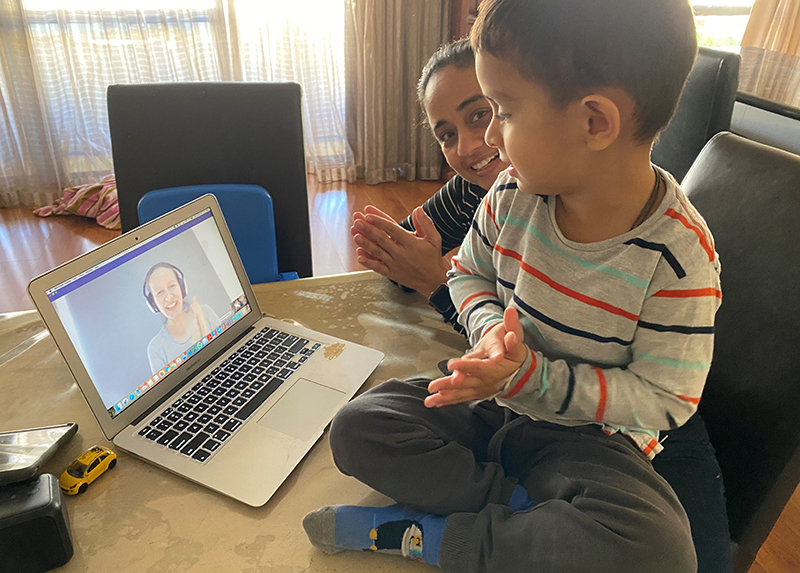
CliniKids clinicians rise to the COVID-19 challengeThe CliniKids team has reimagined how allied health services for children with autism spectrum disorder or developmental delays are delivered.
News & Events
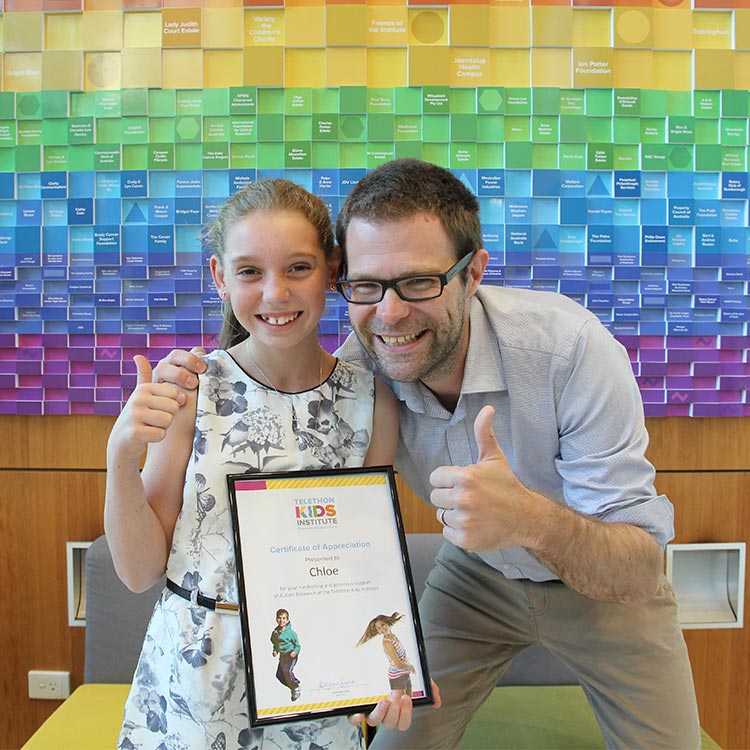
Fundraising star: Chloe (11) Bakes for Autism ResearchChloe recently decided to bake cupcakes to sell to her school friends and teachers and it was all for a cause very close to her heart - autism research.
News & Events
Communication toolsFor Speech Pathology Week, we asked our speech pathologists to share their favourite resource/s and how they like to use it.

Research
Evidence that infant and early childhood developmental impairments are associated with hallucinatory experiences: Results from a large, population-based cohort studyCognitive and motor dysfunction are hallmark features of the psychosis continuum, and have been detected during late childhood and adolescence in youth who report psychotic experiences (PE). However, previous investigations have not explored infancy and early childhood development.