
Search
Andrew Videos Whitehouse Watch and listen to Andrew PhD Deputy Director (Research); Angela Wright Bennett Professor of Autism Research at The Kids
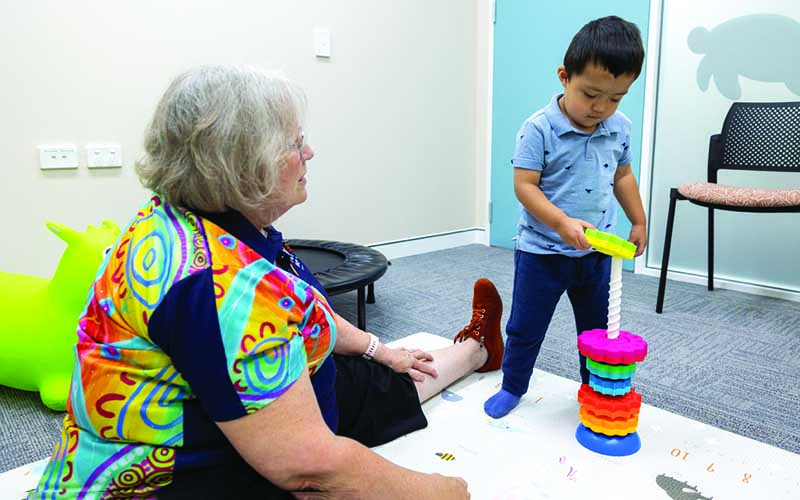
Discover how this family is benefitting from CliniKids' evidence-based therapies.
We do not know much about what support services people think are okay for young autistic children. This study was a survey of 253 people. We asked autistic adults, parents, and professionals from Australia and New Zealand whether they thought it was okay to provide support services to autistic children.
Autistic children have an increased likelihood of anxiety, but more research is needed on the characteristics that predict various types of anxiety in this population.
Although up to 89% of autistic children experience feeding difficulties, little is known about the impact of these difficulties on mealtime participation. The aim of this study was to explore the impact of feeding difficulties on the mealtime participation of autistic children and their families based on caregiver experiences.
An estimated 3.5%-5.9% of the global population live with rare diseases, and approximately 80% of these diseases have a genetic cause. Rare genetic diseases are difficult to diagnose, with some affected individuals experiencing diagnostic delays of 5-30 years. Next-generation sequencing has improved clinical diagnostic rates to 33%-48%. In a majority of cases, novel variants potentially causing the disease are discovered.
The aim of this study was to investigate the influence of children's autism characteristics, sensory profiles and feeding difficulties on caregiver-reported impact at mealtimes.
This study examined whether parent-reported atypical development in their child's first year was associated with age of diagnosis and age when parents first needed to consult a specialist about their child's development.
With advances in perinatal care, we have achieved major reductions in mortality in premature and critically ill infants, but they still remain at increased risk of neurodevelopmental disability. In this context, recent advances in neuroimaging are perceived as an addition of significant value to current clinical developmental screening programs.
While theory supports bidirectional effects between caregiver sensitivity and language use, and infant language acquisition-both caregiver-to-infant and also infant-to-caregiver effects-empirical research has chiefly explored the former unidirectional path. In the context of infants showing early signs of autism, we investigated prospective bidirectional associations with 6-min free-play interaction samples collected for 103 caregivers and their infants (mean age 12-months; and followed up 6-months later).