
Search
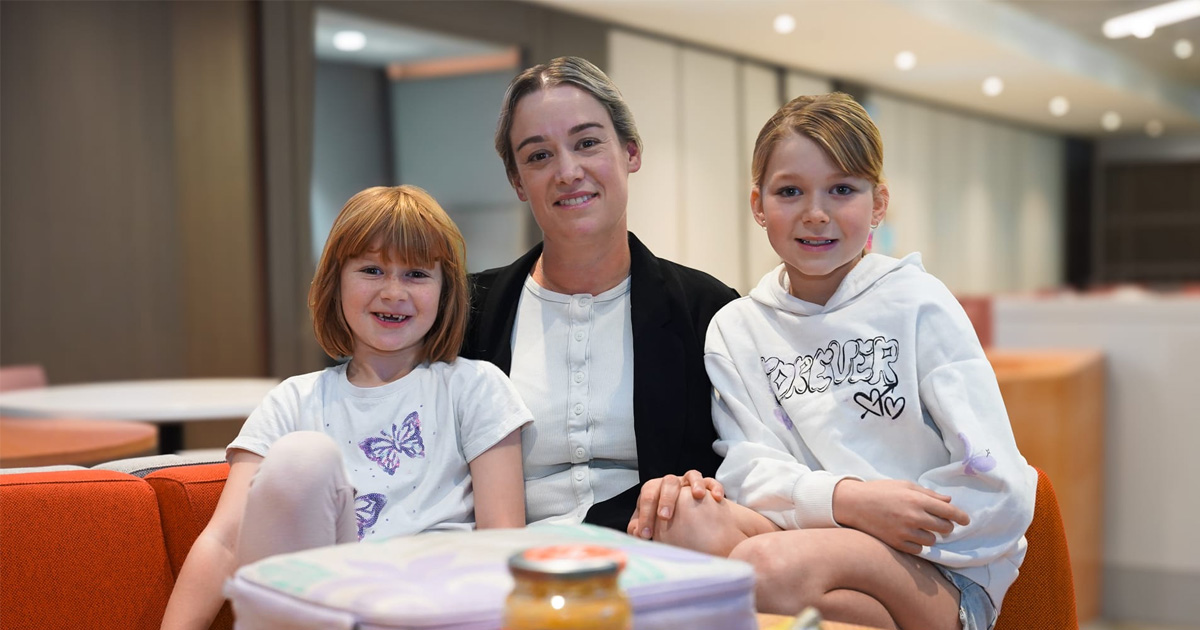
Families who introduce peanut butter and eggs to their baby’s diet at around six months of age can significantly reduce the chances of them developing a life-threatening allergy, according to a new study published in the Journal of Allergy and Clinical Immunology – In Practice.

Mothers eating a diet rich in peanuts while breastfeeding might be helping to reduce their baby’s risk of developing a peanut allergy – that’s the hypothesis of a new clinical trial that has been granted $2.29 million in funding by the National Health and Medical Research Council (NHMRC).
Reasons for Th2 skewing in IgE-mediated food allergies remains unclear. Clinical observations suggest impaired T cell activation may drive Th2 responses evidenced by increased atopic manifestations in liver transplant patients on tacrolimus (a calcineurin inhibitor). We aimed to assess differentiation potential, T cell activation and calcium influx of naïve CD4+ T cells in children with IgE-mediated food allergies.
Bacille Calmette-Guérin (BCG) is the most commonly administered vaccine in human history. The medical application of BCG extends far beyond the fight against tuberculosis. Despite its stellar medical record over 100 years, insight into how BCG provides this vast range of benefits is largely limited, both for its pathogen-specific (tuberculosis) as well as pathogen-agnostic (other infections, autoimmunity, allergies, and cancer) effects.
Early onset Non-Communicable Diseases (NCDs), including obesity, allergies, and mental ill-health in childhood, present a serious and increasing threat to lifelong health and longevity. The ORIGINS Project (ORIGINS) addresses the urgent need for multidisciplinary efforts to understand the detrimental multisystem impacts of modern environments using well-curated large-scale longitudinal biological sample collections.
No approved treatment for peanut allergy exists for children younger than 4 years of age, and the efficacy and safety of epicutaneous immunotherapy with a peanut patch in toddlers with peanut allergy are unknown.
The way the immune system operates differs between males and females. This is due to both differential expression of immune-related genes from the sex chromosomes as well as the immune modulatory properties of sex hormones. Together, these effects contribute to a skewed prevalence of disease and disease course between males and females, including allergic-, infectious-, autoimmune-, and cancerous disease.
Few studies have examined long-term outcomes following oral immunotherapy; none have examined long-term risks and benefits associated with distinct clinical outcomes (desensitization, remission).
Evidence suggests that children who had received an initial priming dose of whole-cell pertussis (wP) vaccine, rather than acellular pertussis (aP) vaccine, had a lower risk of developing IgE-mediated food allergy, the most common cause of anaphylaxis-related hospital presentations of childhood.
The predisposition to food allergy development and the induction of allergen-specific immune responses appears to be initiated early in infancy. Early exposure to food allergens, such as peanut and cashew nut, via human milk is likely important in initiating oral tolerance and reducing risk of food allergy development. This trial aims to determine if the risk of developing peanut and cashew nut allergy during infancy can be reduced by a high peanut and cashew nut maternal diet during lactation.