
Search
Showing results for " https://www.galaxus.ch/en/sector/showdiscussion/freesnapchathack-visit-kunghaccom-t1tzlqbw-226931"
Children's physical activity and screen time behaviours impact their physical health and well-being. In Australia, less than half of children meet daily physical activity recommendations and only one-third meet daily screen time recommendations.
Child poverty remains a major global concern and a child's experience of deprivation is heavily shaped by where they live and the stability of their local neighbourhood. This study examines frequencies and patterns of residential mobility in children and young people at a population level using novel geospatial techniques to assess how often their physical environment changes and to identify geographical variations in social mobility.
Pete Azzopardi PhD, FRACP, MEpi, MBBS, GDipBiostats, BMedSci Head, Adolescent Health and Wellbeing Head, Adolescent Health and Wellbeing Professor
Dog ownership is common in families with children and could play a role in children's social-emotional development. This study used longitudinal data on dog ownership and changing dog ownership to investigate their effects on young children's social-emotional development.
Pete Azzopardi PhD, FRACP, MEpi, MBBS, GDipBiostats, BMedSci Head, Adolescent Health and Wellbeing Head, Adolescent Health and Wellbeing Professor
Canada, Australia, the World Health Organization and other countries have released 24-hour movement guidelines for the early years which integrate physical activity, sedentary behaviour, and sleep, focusing on supporting children to achieve a healthy 24-hour day. The guideline evidence synthesis, however, highlighted the dearth of high-quality evidence, particularly from large-scale studies.
Current methods for assessing the healthfulness of 24-hour movement behaviours (sleep, sedentary time, light physical activity, moderate-to-vigorous physical activity) use binary classifications that fail to capture their continuous and compositional nature. This study introduces a percentile-based scoring and visualization approach to evaluate the healthfulness of movement behaviour time-use compositions, using social-emotional development in early childhood as an example.
This study adds to the current literature by using a novel device-based method to explore where preschool children are physically active outside of home and childcare settings. This study combined accelerometry with geospatial data to explore the influence of the environment on preschool children's physical activity by objectively identifying the locations where preschool children engage in moderate to vigorous physical activity (MVPA) within and outside of their neighborhood.
On this Research Impact page, learn about our work that's actively translated as Government policy or in active practice. Learn how our research is making a difference in people's lives - not tomorrow, next week, or next year - but today!
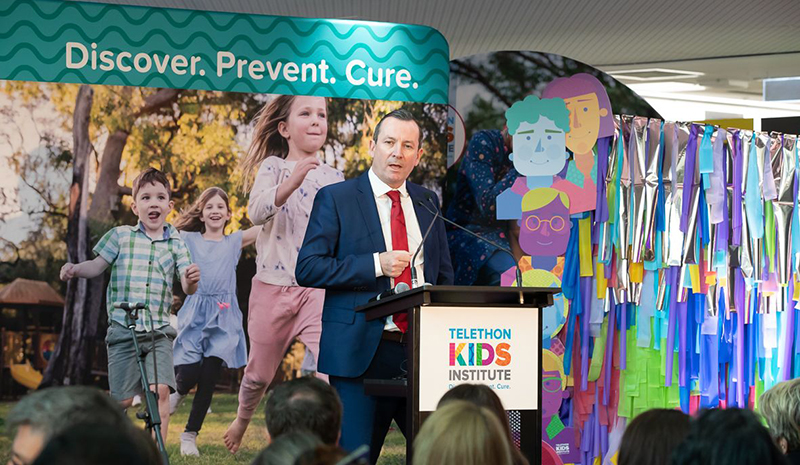
Budding young scientists can now gain an insight into the world of research thanks to The Kids Research Institute Australia’s newly opened Discovery Centre.