
Search

STARS for Kids, a sub-project of ORIGINS, received a three-year grant to advance the development of a scalable, online, tiered model of care to better support disadvantaged communities, where 20-25 per cent of children are entering school developmentally vulnerable.

Three researchers from The Kids Research Institute Australia were recognised as being among Western Australia’s brightest and most innovative scientific minds at last night’s 24th Premier's Science Awards.
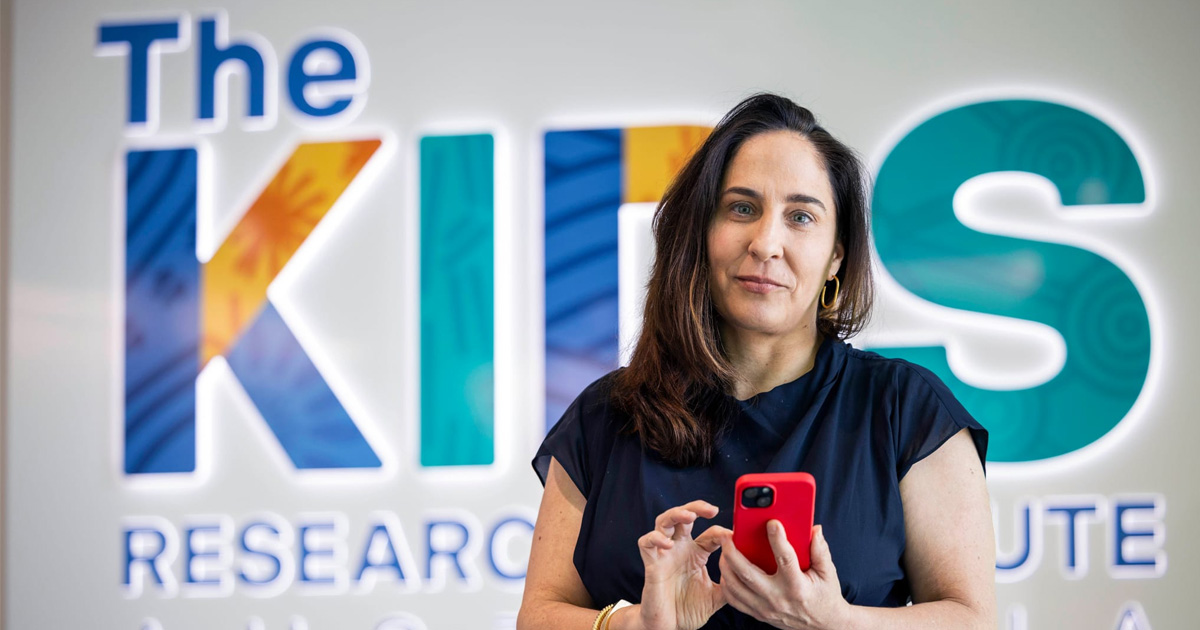
A unique national study to examine the impact of the Federal Government’s social media ban on families is being undertaken by The Kids Research Institute Australia, in collaboration The University of Western Australia and Edith Cowan University.

A project that aims to understand and support the mental health of Australians with complex gender-affirmation experiences has received the $150,000 Embrace Big Idea Grant for 2024.

With the school year now well underway, it’s not uncommon for kids to start feeling the stress of assignments, homework and extracurricular activities.

A The Kids Research Institute Australia researcher whose work focuses on the mental health of babies and young children has been chosen from a global field to become one of 20 new Zero to Three Fellows.
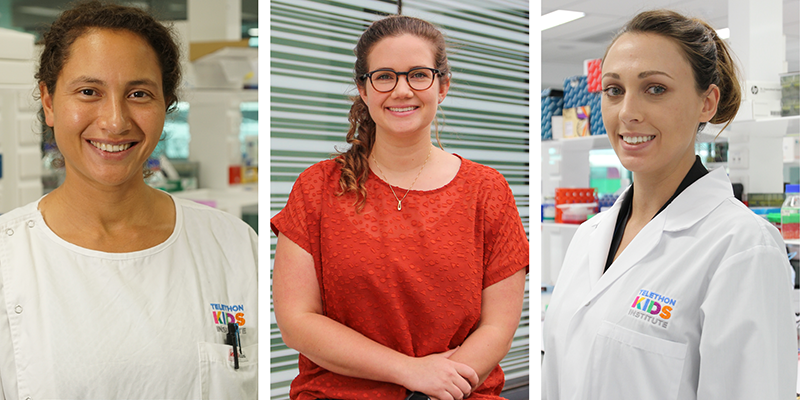
Three outstanding young researchers from The Kids Research Institute Australia have been named Raine Fellows and received valuable Raine Priming Grants to support their child health research.

A study by researchers at The Kids Research Institute Australia has found Aboriginal mothers are at a significantly greater risk of preventable death than other Australia
Alexithymia is a trait involving difficulties identifying feelings, difficulties describing feelings, and an externally orientated thinking style. It is an important risk factor for a range of psychopathologies, and its assessment is therefore important in research and clinical settings. Originally created in English, the Perth Alexithymia Questionnaire-Short Form (PAQ-S) is a brief 6-item self-report measure of alexithymia.
Gratitude has consistently been associated with various beneficial health-related outcomes, including subjective wellbeing, positive mental health, and positive physical health. In light of such effects, positive psychology researchers and practitioners have often implemented gratitude interventions in an attempt to build individuals' orientations toward appreciation and thankfulness. Recent meta-analyses and reviews have revealed, however, that these interventions often have mixed effects on gratitude or other health outcomes.