
Search
This study examines whether nonstandard work schedules (NSWS) improve or hinder work-life balance (WLB) for parents and non-parents in dual-earner households.
Respiratory disease is a leading cause of hospitalisations in children with cerebral palsy (CP). Over 40% of individuals with CP are born preterm; however, the relationship between prematurity, CP and respiratory disease is unknown.
While parenting self-efficacy and broader autism phenotype (BAP) have been linked to caregiver depression, anxiety and stress at specific points in time, their influence on longer-term mental health trajectories remains unknown, especially for caregivers who participate in support programs for their infants with very-early autistic features.
Information on factors contributing to quality of life (QOL) informs meaningful patient-centred care. We evaluated factors influencing QOL in individuals with developmental and epileptic encephalopathy (DEE) and other severe neurodevelopmental encephalopathy conditions using hypothesis-free regression tree analysis.
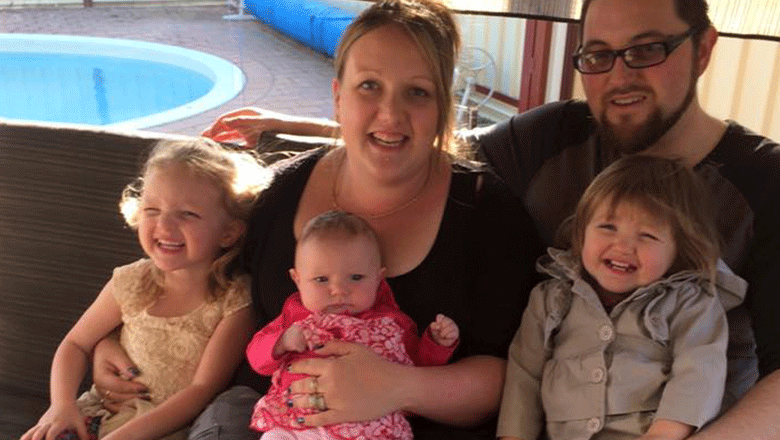
The Kids Research Institute Australia researchers are offering a free nutrition and lifestyle program for plus sized mums and their babies who live in the Joondalup area.
Many children do not accumulate sufficient physical activity for good health and development at early childhood education and care (ECEC). This study examined the association between ECEC organizational readiness and implementation fidelity of an ECEC-specific physical activity policy intervention.
The objective of this study was to explore Australian children's engagement in physical activity and screen time while being cared for by their grandparents.
LiL' STEPS (Language development & Intervention Lab's SupporTing Early social-communication and language by Promoting caregiver Sensitive responsiveness) is a novel, manualized, caregiver-mediated early support program developed in India and delivered online for infants at elevated familial likelihood for autism. The program has been found to be feasible and acceptable. The preliminary efficacy of the LiL' STEPS program, which remains to be evaluated, was assessed in this study using a feasibility randomized controlled trial design.
There is an urgent need for scalable interventions to promote physical activity in early childhood. An early childhood education and care physical activity policy intervention with implementation support strategies (Play Active) has been proposed for scale-up in Australia.
Yalemzewod Assefa Gelaw PhD, MPH, BSc Honorary Research Associate Yalemzewod.Gelaw@thekids.org.au Honorary Research Associate Dr Yalemzewod Gelaw