
Search
Middle ear infections are one of the main reasons that children visit a GP, are prescribed antibiotics and need surgery. Aboriginal children are particularly susceptible and commonly suffer from hearing loss which can affect speech and learning.
(Central) Auditory Processing Disorder ([C]APD) is an umbrella term for children who have difficulty with listening, despite normal hearing. Children with (C)APD frequently experience academic, behavioural, emotional, cognitive and social difficulties, and lack accessible, long-lasting wholistic treatments. Hence, a transdisciplinary intervention has been developed – Auditory-Cued Exercise Therapy.
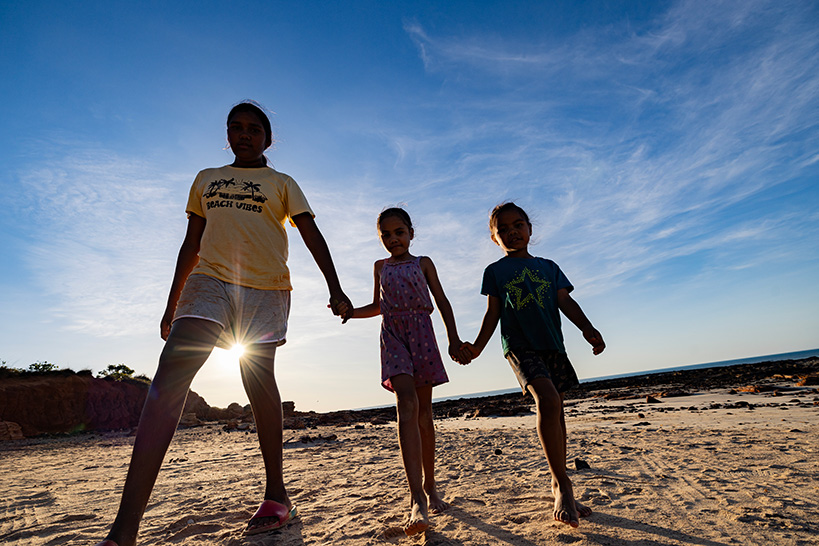
Aboriginal health is everyone's business. The needs of Aboriginal and Torres Strait Islander families and kids is integrated into all relevant areas of our work. Improving the health and wellbeing of Aboriginal and Torres Strait Islander kids and families is an overarching priority for every team at The Kids.
Congenital cytomegalovirus (cCMV) is a common infection at birth with the potential to cause significant and permanent morbidity, most commonly hearing loss. Targeted cCMV testing programmes use hearing loss as an indicator of an infant being at high risk of the infection and thereby can 'target' or focus testing on those at greatest risk. Australian and International guidelines recommend that high-risk infants be offered cCMV testing, yet across Australia, a formal testing system does not exist.
Otitis media (OM) is a significant health concern, particularly among Aboriginal and/or Torres Strait Islander children who experience one of the highest rates of OM globally. This study aimed to evaluate the use and differences of wideband absorbance at ambient pressure (WBA) among urban Aboriginal and/or Torres Strait Islander and non-Aboriginal children with suspected OM based on standard tympanometry.
Otitis media (OM), or middle ear infection, is one of the most common childhood illnesses globally. In Australia, OM remains a leading cause of antibiotic prescriptions in children, despite growing awareness of antimicrobial resistance (AMR) and the need for stewardship. Preventing OM not only reduces the burden of disease but also plays a critical role in curbing unnecessary antibiotic use and slowing the rise of AMR.
Australian First Nations children are at very high risk of early, recurrent, and persistent bacterial otitis media and respiratory tract infection. With the PREVIX randomised controlled trials, we aimed to evaluate the immunogenicity of novel pneumococcal conjugate vaccine (PCV) schedules.
Nontypeable Haemophilus influenzae (NTHi) is the most common bacterial otopathogen associated with otitis media (OM). NTHi persists in biofilms within the middle ears of children with chronic and recurrent OM. Australian Aboriginal children suffer exceptionally high rates of chronic and recurrent OM compared to non-Aboriginal children.
To assess the degree to which timely audiological assessment of congenital hearing loss is achieved at our institution - Perth Children's Hospital, Western Australia, and to review cases which breached this timeframe in order to address barriers to timely assessment. The benchmark used to determine timely assessment is that set out by The Joint Committee on Infant Hearing (JCIH) in which diagnostic audiological testing occurs by three months of age for those who do not pass newborn hearing screening.
Our goal was to identify genetic risk factors for severe otitis media (OM) in Aboriginal Australians.