
Skip to content
The Kids Research Institute Australia logo
Donate

No results yet

Search

News & Events

Beyond the horizon: improving cancer outcomes for Indigenous children

Dr Jessica Buck, a researcher at The Kids Research Institute Australia Cancer Centre and a Kamilaroi woman, is on a mission to address the unique challenges faced by Aboriginal and Torres Strait Islander children with cancer.

Research

Review of Universal Access Funded Aboriginal Children with Hearing Impairment Support Program

In 2021 the South Australian Department for Education commissioned The Kids Research Institute Australia to undertake a review of the Hearing Impairment Support Program (HISP).

Research

Analysis of gender differences between boys and girls in South Australia

The Department for Education commissioned this report to understand how such gender differences in early childhood may influence outcomes later in life.

Research

The relationship between early adolescent cyberbullying victimization and later emotional wellbeing and academic achievement

This study addresses a knowledge gap in the literature about early adolescent cyberbullying victimization and the related positive and negative emotional wellbeing and academic achievement outcomes experienced over time. 

Research

Identifying factors contributing to shifts in children’s development on school entry in NSW over the past decade

The aim of this project was to conduct a critical analysis of the AEDC data for NSW children to understand the factors contributing to the changes in child development outcomes over time.

News & Events

Lab results confirm promise of new immunotherapy gel for kids cancer

Newly published research from The Kids Research Institute Australia and The University of Western Australia has found a gel applied during surgery to treat sarcoma tumours is both safe and highly effective at preventing the cancer from growing back.

Research

Mental Health Literacy for Supporting Children: A Systematic Review of Teacher and Parent/Carer Knowledge and Recognition of Mental Health Problems in Childhood

The level of mental health literacy (MHL) in adults who work with or care for children is likely to influence the timeliness and adequacy of support that children receive for mental health problems.

Research

Immunosuppressive mechanisms of oncofetal reprogramming in the tumor microenvironment: implications in immunotherapy response

Both fetal and tumor tissue microenvironments display immunosuppressive features characterized by the presence of specific immunomodulatory stromal and immune cell populations. Recently, we discovered shared microenvironments between hepatocellular carcinoma and fetal tissues and described this phenomenon as an oncofetal ecosystem.

Research

Associations between mental health profiles and later school outcomes

The dual-factor model of mental health proposes that high wellbeing and low distress are necessary to define mental health. This study used latent profile analysis to identify mental health profiles in a sample of 3,587 Australian grade 6 students and explored the association between mental health profiles and school outcomes measured in grades 7 and 9.

Research

The bone marrow microenvironment of pre-B acute lymphoblastic leukemia at single-cell resolution

The bone marrow microenvironment (BMM) plays a key role in leukemia progression, but its molecular complexity in pre-B cell acute lymphoblastic leukemia (B-ALL), the most common cancer in children, remains poorly understood. To gain further insight, we used single-cell RNA sequencing to characterize the kinetics of the murine BMM during B-ALL progression.

Research

The Causal Effect of Parent–Child Interactions on Child Language Development at 3 and 4 Years

Language development is critical for children's life chances. Promoting parent-child interactions is suggested as one mechanism to support language development in the early years. However, limited evidence exists for a causal effect of parent-child interactions on children's language development.

Research

The ETO2 transcriptional cofactor maintains acute leukemia by driving a MYB/EP300-dependent stemness program

Transcriptional cofactors of the ETO family are recurrent fusion partners in acute leukemia. We characterized the ETO2 regulome by integrating transcriptomic and chromatin binding analyses in human erythroleukemia xenografts and controlled ETO2 depletion models. We demonstrate that beyond its well-established repressive activity, ETO2 directly activates transcription of MYB, among other genes.

Research

Early childhood education quality and child development in Lao PDR

Globally, as scale up of early childhood education (ECE) continues, monitoring ECE quality is imperative to promote service aspects that drive positive outcomes for children. Monitoring of ECE quality in low- and middle-income countries (LMICs) is scarce, limited by challenges in varied conceptualisations of quality, lack of measurement tools that reflect local culture and context, and implementation difficulties in low resource settings.

Research

Long-term outcomes of symptomatic optic pathway glioma: 32-year experience at a single Western Australian tertiary pediatric oncology center

Optic pathway gliomas (OPGs) are associated with significant risk of visual and endocrine morbidity, but data on long-term outcomes in symptomatic patients is sparse. This study reviews the clinical course, disease progression, survival outcomes and long-term sequelae in pediatric patients with symptomatic OPGs in our institution over three decades.

Research

An Overview of Early Childhood Health and Education Service Provision in Australia

The impact of children’s experiences through their first 2,000 days of life – from conception to the start of full-time schooling – are widely acknowledged.

Research

Clinical Implications of Minimal Residual Disease Detection in Infants With KMT2A-Rearranged Acute Lymphoblastic Leukemia Treated on the Interfant-06 Protocol

Infant acute lymphoblastic leukemia (ALL) is characterized by a high incidence of KMT2A gene rearrangements and poor outcome. We evaluated the value of minimal residual disease (MRD) in infants with KMT2A-rearranged ALL treated within the Interfant-06 protocol, which compared lymphoid-style consolidation (protocol IB) versus myeloid-style consolidation (araC, daunorubicin, etoposide/mitoxantrone, araC, etoposide).

Research

Screen Time and Parent-Child Talk When Children Are Aged 12 to 36 Months

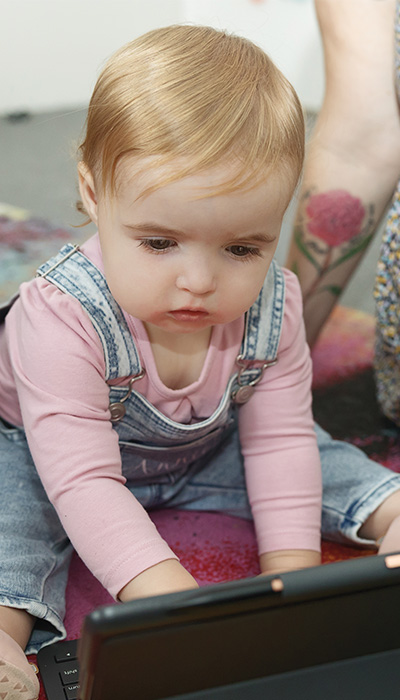
Growing up in a language-rich home environment is important for children's language development in the early years. The concept of "technoference" (technology-based interference) suggests that screen time may be interfering with opportunities for talk and interactions between parent and child; however, limited longitudinal evidence exists exploring this association.