Skip to content
The Kids Research Institute Australia logo
Donate

Search

Research

General Movement Optimality Score-Revised (GMOS-R) with General Population-Based Percentile Ranks

To describe writhing General Movements Assessment (GMA) classification and General Movement Optimality Score-Revised (GMOS-R) profiles in the general population; to explore relationships between GMOS-R scores and GMA classification, age of assessment and infant socio-demographic factors; and to establish the inter-rater reproducibility of writhing age GMA classification and GMOS-R.

Research

ASCIA Guideline: Infant Feeding for Food Allergy Prevention

The Australasian Society of Clinical Immunology and Allergy (ASCIA) Guideline: Infant Feeding for Food Allergy Prevention is an update of the 2016 ASCIA guideline. This updated guideline provides recommendations specifically in relation to infant feeding for food allergy prevention. 

Research

Replicating hypergraph disease dynamics with lower-order interactions

Disease spreading models such as the ubiquitous SIS compartmental model and its numerous variants are widely used to understand and predict the behavior of a given epidemic or information diffusion process. A common approach to imbue more realism to the spreading process is to constrain simulations to a network structure, where connected nodes update their disease state based on pairwise interactions along the edges of their local neighborhood. 

Research

Young children with cystic fibrosis and tracheobronchomalacia have longer and more frequent hospital admissions

Tracheobronchomalacia (TBM) is characterised by abnormal collapsibility of the trachea and bronchi, often seen in children with cystic fibrosis (CF). This study aims to determine the impact of TBM on hospital admissions in young children with CF.

Research

Consumer and community involvement in health research: evaluation of researcher training workshops

Evaluate the effectiveness of training workshops aiming to improve researchers' consumer and community involvement (CCI) related awareness, attitudes, and behaviours, and capture remaining barriers to CCI.

Research

Understanding parental decisions to decline or delay infant RSV immunisation, nirsevimab, in Western Australia in 2024

In 2024, the government of Western Australia introduced 'nirsevimab', a monoclonal antibody offering protection from respiratory syncytial virus (RSV), for eligible infants. This study explores why parents of infants who were eligible to receive nirsevimab opted to decline or delay the immunisation.

Infographics

The visual representation of Teen Talk study findings

News & Events

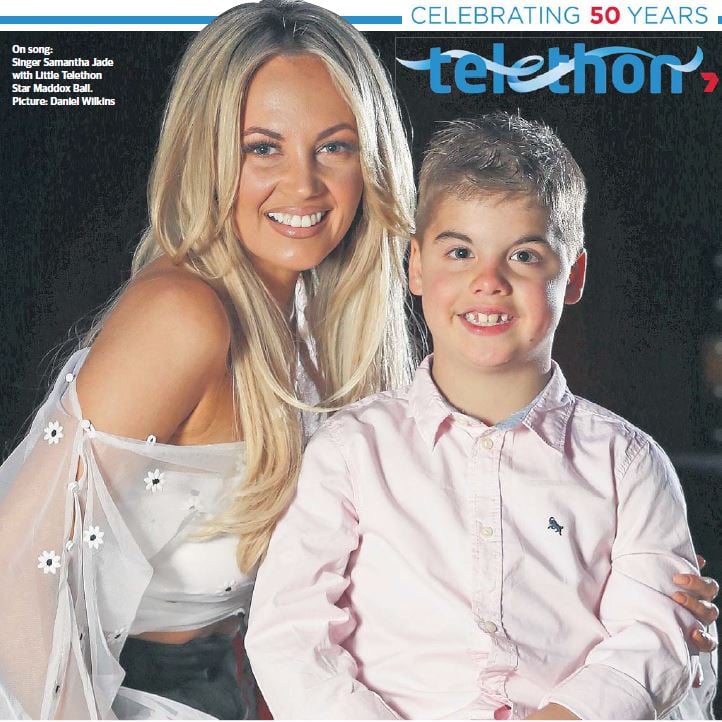
Telethon smashes records as West Australians dig deep for sick kids

Huge congratulations to Telethon on another record-breaking year, with generous West Australians donating just over $38 million to help sick kids.

News & Events

Child health and obesity the focus of international built environment study

Research data from more than one million Australian and Welsh children will be examined to help better understand how the built environment affects child health and obesity, as part of an international research project to be co-led by The Kids Research Institute Australia.

News & Events

Four The Kids Research Institute Australia research leaders named as finalists for West Australian of the Year Awards

Four outstanding members of The Kids Research Institute Australia family have been named as finalists in the 2024 Western Australian of the Year Awards.